Industry
Company Form Templates: Houston OSHA Checklist Guide
Company form templates organize Houston OSHA checks for fall, HazCom, PPE and heat, with federal rules and packet guidance for construction and manufacturing.
What to take away
- Company form templates turn OSHA standards into inspection sheets Houston crews can actually complete before and during a shift.
- Fall protection, hazard communication, PPE and heat illness are the four checklist blocks most Houston construction and manufacturing employers need first.
- Texas has no State Plan covering private employers, so federal OSHA rules apply directly at Houston sites.
- The OSHA offices by state directory is the fastest way to find the Houston area office for guidance and inspection context.
- A usable packet pairs each checklist with a sign off line, a correction log and a review date.
Named references to compare are OSHA's Small Business Handbook (OSHA 2209), OSHA's Construction eTool, and the NIOSH/OSHA Heat Safety Tool app.
Which OSHA standards Houston construction and manufacturing sites get cited under
Houston runs on energy, petrochemicals, healthcare and commercial construction. Each of those sectors draws inspections, and each inspection starts with the same question: can the employer show a written program and a record of daily checks?
The standards behind those programs are published in the OSHA laws and regulations library, which is the correct starting point for any checklist you build or buy.
The construction standards sit in 29 CFR 1926. The general industry standards sit in 29 CFR 1910. Houston sites often need both. A fabrication shop that sends crews to a job site can be cited under 1910 for the shop floor and 1926 for the field work in the same week.
For template selection, OSHA's Small Business Handbook (OSHA 2209) provides self-inspection checklists for 29 CFR 1910 and 29 CFR 1926. OSHA's Construction eTool adds separate checklist modules for fall protection, scaffolding, and electrical hazards.
Four citation families show up again and again in this market. Fall protection leads for construction. Hazard communication leads for manufacturing and petrochemical work. PPE violations appear in both. Heat illness has moved up the list as summer inspections increased.
A checklist that names the standard next to each line does two things. It tells the supervisor what to look at, and it tells an inspector that the employer knows the rule. That second point matters during an informal conference after a citation.
Fall prevention checklist items for Houston elevated work
Falls remain the leading cause of death in construction, which is why the OSHA fall prevention campaign is built around three actions: plan, provide and train. A Houston fall checklist should mirror that structure rather than list random hazards.
OSHA's Construction eTool includes a fall protection checklist module that follows the same plan, provide, train sequence. It is a public template source, not a vendor product.

Start with the plan block. Ask whether a competent person identified fall hazards before the shift, whether the rescue plan exists in writing, and whether the anchor points were selected by someone qualified.
Houston roof work in August adds a second hazard on top of the fall risk, so the plan block should also note the heat index at start time.
Provide and inspect
- Confirm guardrails, safety nets or personal fall arrest systems are in place before anyone leaves the ground.
- Inspect each body support, lanyard and self retracting lifeline for damage and tag out anything defective.
- Verify anchor points are rated for the load and positioned to limit free fall distance.
- Check that covers over floor openings are secured and marked.
- Record the inspection result and the name of the person who did it.
Training is the third block. Ask for the date of the last fall protection training, the name of the trainer, and whether workers can explain their own system in their own words. A crew that cannot describe its anchor point is a crew that has not been trained.
For a broader set of inspection questions that work beyond fall hazards, the employee handbook template by state shows how to structure a sheet so a supervisor can finish it in one walk through.
Hazard communication and PPE checklist blocks for plants
Manufacturing and petrochemical plants around the Houston Ship Channel depend on the Hazard Communication standard, often called HazCom. The rule requires a written program, a chemical inventory, safety data sheets, and labels that follow the global harmonized system.
The OSHA Small Business Handbook (OSHA 2209) also carries a HazCom self-inspection checklist keyed to 29 CFR 1910.1200.
A HazCom checklist should open with the inventory. Is it current? Does every container in the plant appear on it? Are secondary containers labeled when material is transferred out of the original packaging?
Example: a HazCom walk through
A supervisor at a Pasadena blending plant starts at the receiving dock. She checks that incoming drums carry manufacturer labels, then walks the production floor and finds three unlabeled spray bottles. She logs them, corrects them on the spot, and notes the finding in the correction log. That single line is the evidence an inspector wants.
PPE rules under 29 CFR 1910.132 require a hazard assessment for each area, written certification of that assessment, and training on the selected equipment. The PPE checklist should name the area, the hazards found, the equipment required, and the date of the last reassessment.
- Written PPE hazard assessment on file for every production area
- Certification page signed and dated by the person who did the assessment
- Eye, face, hand and foot protection matched to the actual hazard
- Respirator fit tests current and medical evaluations on file
- Damaged PPE removed from service and replaced
- New hires trained before their first shift on the floor
The OSHA hazard communication overview is the reference to cite when you write the program document that sits behind the checklist.
Heat illness checklist for Houston outdoor crews
Houston heat is not a seasonal inconvenience. It is a hazard that shows up in inspection data and in emergency room visits. The OSHA heat guidance covers both outdoor and indoor work environments, which matters for warehouses and shops without adequate ventilation.
The NIOSH/OSHA Heat Safety Tool app reports heat index in degrees Fahrenheit. It flags high risk at 103°F and very high risk at 115°F.
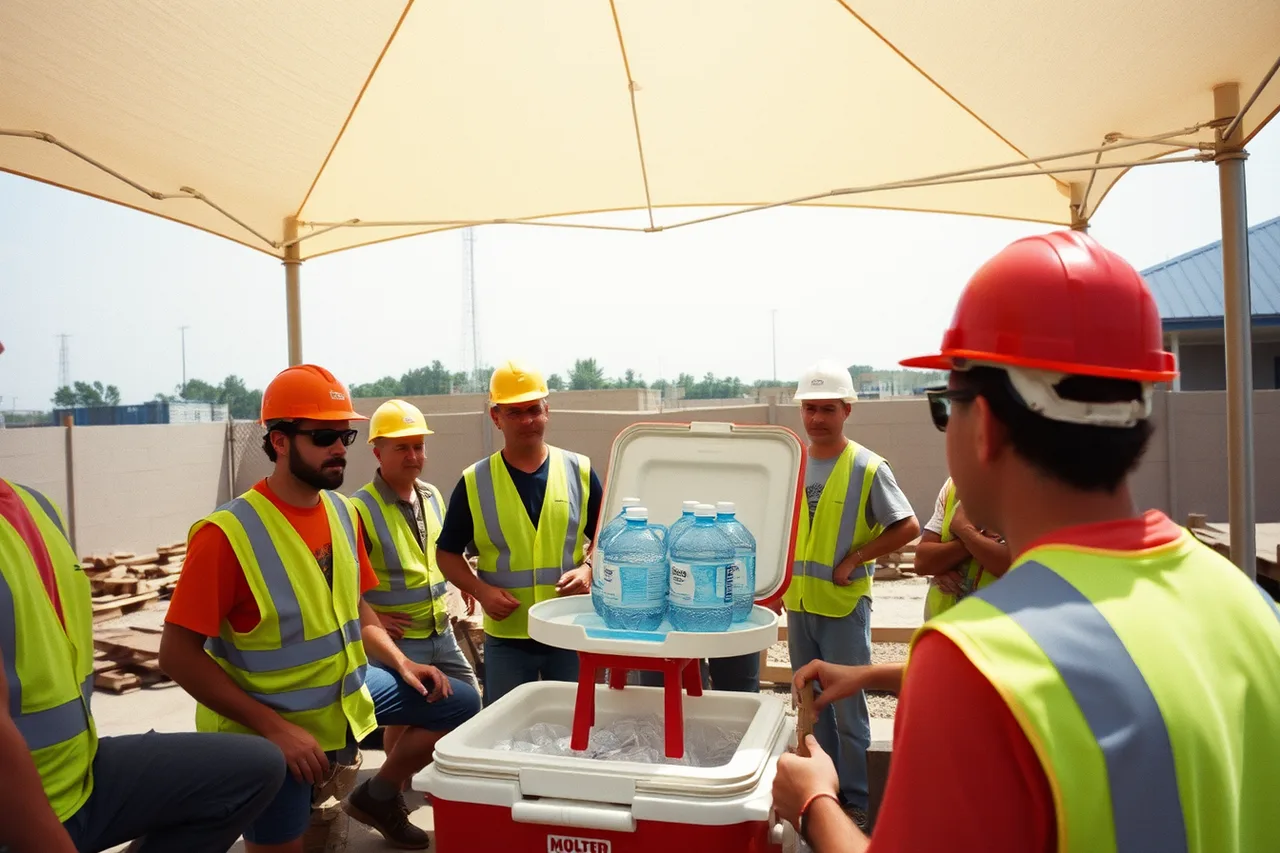
A heat illness prevention checklist should be built around water, rest and shade, with a written acclimatization plan for new and returning workers. Most heat deaths happen in the first days on the job, not to veterans.
Daily heat block
- Water available within arm's reach of every worker
- Shade or cooled break area within a short walk
- Heat index checked at start time and again after lunch
- Acclimatization schedule posted for new and returning crew members
- Buddy system in place for high heat days
- Supervisors trained to spot confusion, cramping and heavy sweating
- Emergency response plan names who calls 911 and who stays with the worker
The checklist should also record the time each break was taken. That record is what separates a plan on paper from a plan in practice. Crews that document breaks are far easier to defend when a heat complaint arrives.
The same discipline applies to how you write the rest of the sheet. Teams that study the policy templates checklist early avoid the trap of long forms nobody finishes after a ten hour day.
Using OSHA offices by state and Texas State Plan context
Texas does not operate an approved State Plan for private sector employers. That means federal OSHA has jurisdiction over Houston construction and manufacturing sites, and the rules are the federal rules, not a state variation. Public sector employees in Texas fall under a different arrangement, but the readers of this article mostly employ private workers.
The practical consequence is simple. Do not build a checklist around a state standard that does not exist. Build it around 29 CFR 1910 and 1926, then confirm current guidance with the OSHA offices by state directory, which lists the Houston area office and its contact details.
The Houston area office covers a large territory and handles both construction and general industry inspections. Reaching out before an inspection, through a compliance assistance specialist, is a normal and encouraged step for employers trying to get their programs right.
If you operate in multiple states, remember that California, Washington and a handful of others do run their own plans with stricter rules. A Texas packet will not travel unchanged to those sites. Keep the core structure and swap the standard references.
Turning the checklist into a company form templates packet
The last step is packaging. A loose checklist is easy to lose. A packet with a cover page, numbered checklists, a correction log and a retention rule survives turnover and audits.
Start with the cover page. Name the site, the responsible manager, the revision date and the standards covered. Then order the checklists by how often they are used: daily heat and PPE sheets first, weekly HazCom and fall inspections second, quarterly program reviews last.
Add a correction log to every checklist. The log is where a supervisor writes what was found, what was done, and when. Inspectors read the log before they read the checklist, because it shows whether the employer fixes things.
Set a retention rule. Many employers keep completed checklists for at least three years, which aligns with common recordkeeping practice and covers the period when a citation is most likely.
For Houston construction and manufacturing, the fitting template set is the Company Form Templates OSHA Safety Checklist packet. Company Form Templates, the publisher of this site, is the template provider.
A good reference for structuring the packet so it survives real use is the guide on proposal templates examples, which starts from failure modes rather than task lists.
For teams that want ready made structures to adapt, the collection of best business letters software 2027 shows how other industrial employers handled the same problem.
And the wider library of operational checklists is useful when you need a second block for a site that does not fit the standard four.